HVAC 101
A plain-English tour of what is happening behind your vents, so repair and replace conversations make more sense.
September 30, 2026 · 4 min read
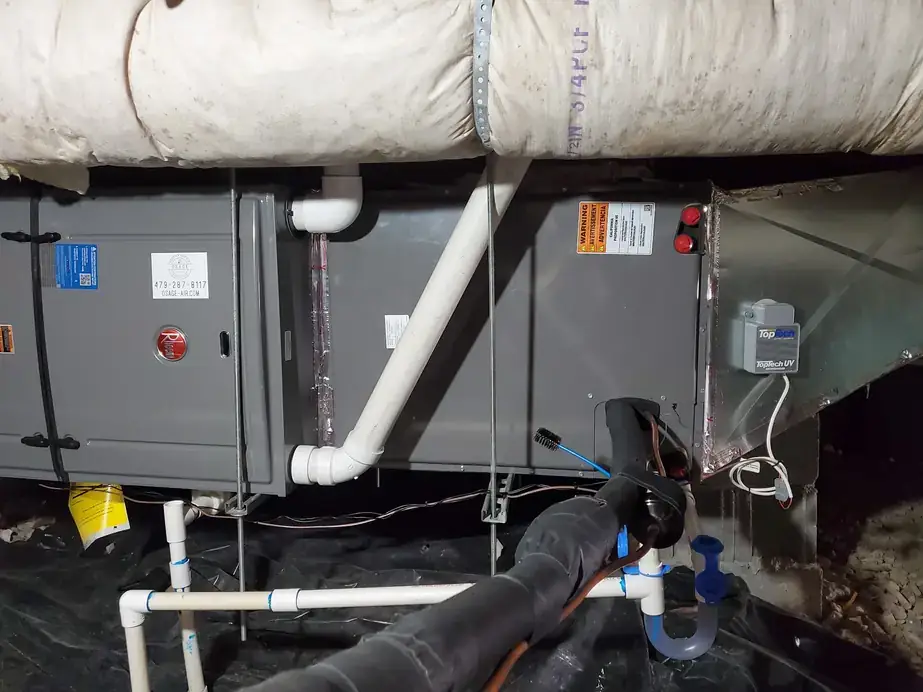
Walk into a cool room on a scorching day and it is easy to forget there is machinery working to make that happen. HVAC stands for heating, ventilation and air conditioning, and it is the system that holds your home at a comfortable temperature. Knowing the basics makes it easier to spot problems, talk with a contractor and decide whether to repair or replace a unit.
Ventilation: how air moves
Most homes have a forced air system. That means a fan moves air through a set of parts:
- Return vents, which pull indoor air back toward the equipment.
- Ductwork, the pathways that carry the air.
- Filters, which catch dust and debris before they reach the equipment.
- A circulating fan, which does the pushing.
- Supply vents, where conditioned air comes back out into the rooms.
The loop works like this. Air is drawn in through the return vents, travels through ducts and passes over devices that change its temperature. Then it is pushed back out into the house through the supply vents. A thermostat tells the system when to run and when it has done enough.
Two bits of physics that make it work
Heating and cooling both lean on a little basic physics. Two ideas matter most.
The first is that a liquid's boiling point depends on the pressure around it. You may have noticed that at higher altitudes, where air pressure is lower, water boils at a lower temperature, which is why some food packages have special cooking instructions for the mountains. Change the pressure and you change the boiling point.
The second is that when a substance turns from a liquid to a gas, it absorbs heat from its surroundings. That is the energy that drives boiling. Think of a pot of water turning to steam.
How your air conditioner uses those ideas
Most home systems are split systems. The work is divided between an outdoor unit, which holds the compressor and condenser, and an indoor unit, which holds the evaporator coil. Copper tubing connects the two, and refrigerant flows through it. Refrigerant is a special fluid designed to change between liquid and gas at moderate temperatures.
Here is the cycle, step by step:
- The refrigerant starts as a cool, low-pressure gas and goes into the compressor.
- The compressor squeezes it into a hot, high-pressure gas.
- In the condenser, that gas condenses into a cooler, high-pressure liquid and gives off its heat to the air outside. The pressure keeps its boiling point high so it stays liquid.
- The liquid reaches the indoor evaporator coil, often attached to the furnace. There, pressure drops, and so does the boiling point, so the refrigerant vaporizes into a gas and absorbs heat from the air passing over the coil.
- The now-cooler air is pushed through the ducts into your rooms by the fan.
That cycle keeps repeating until the thermostat says the house has reached the temperature you set.
How heating works
Heating systems vary more than cooling systems, but the basic idea is familiar: draw air in through the ducts, warm it up and send it back out. The difference is how they make the heat.
A heat pump works like an air conditioner that can run in reverse. By flipping the job of the hot and cold coils, it can heat or cool. In heating mode it pulls heat from outdoor air and moves it inside. A furnace makes heat a different way, by burning fuel such as natural gas or oil.
Heat pump or furnace with central air?
This choice confuses a lot of homeowners, and there is no single right answer.
- A heat pump heats and cools with one piece of equipment, so there is one unit to maintain.
- A furnace paired with central air splits the year between two systems, and because each only runs part of the year, combination setups often last longer.
- Fuel cost has historically favored furnaces, although that can change over time.
- Heat pumps are often recommended for milder climates and furnace plus central air for harsh winters.
- Hybrid systems, which combine a furnace and a heat pump and switch between them depending on the outdoor temperature, are getting more popular.
For Northwest Arkansas, where we get real summers and real winters, it is worth having a contractor talk through what fits your house rather than picking from a list.
Why the basics help
Understanding how the system works helps you describe problems clearly and ask better questions. If your house is cooling slowly, is the issue airflow, like a dirty filter or a blocked return, or is it in the refrigerant cycle? Knowing the difference makes the conversation with a technician faster and more useful.
It is also a good reason to leave the repairs to people trained for them. These systems are complicated, and some parts carry hazards, including high-pressure refrigerant, electrical components and fuel. Changing a filter is a good homeowner job. Anything beyond that calls for a professional.
If you have questions about your own system, or you want a technician to walk you through what you have, call Osage Air at (479) 349-3502. We are happy to explain things plainly, and there is no pressure to buy anything.
Osage Air, (479) 349-3502
Call (479) 349-3502More articles
Decoding Furnace Smells
Some furnace smells are just the first cold snap stirring up dust, and some mean you should leave the house, so here is how to tell them apart.
What is the average life span of an HVAC system in NWA?
Ten to twelve years is a fair expectation with regular maintenance, but equipment, upkeep and our Arkansas weather all move that number.