Indoor air
Indoor air quality in Northwest Arkansas
Eleven things can be in the air of a home, from radon to humidity. Osage finds which ones are yours and fits the filter, light or scrubber that answers them.
Chapter 01
The eleven things in a home's air, from radon to humidity
Most of what makes indoor air a problem cannot be seen. Radon has no smell or color and only shows up on a test kit or monitor. Carbon monoxide comes from a cracked heat exchanger on a gas furnace. Mold follows moisture. Osage names eleven common culprits: radon, asbestos, second hand smoke, lead, pesticide, mold, formaldehyde, VOCs, allergens, carbon monoxide and humidity. The full list sits below on this page.
Some of those are a building problem, some are a habit, and a few are an HVAC problem. Humidity is the one we meet most. Ideal humidity is usually between 45-55%, and a system that is too large cools the house so fast it never runs long enough to pull moisture out of the air. That is one more reason sizing matters on a new system.
Air quality work starts with a conversation, not a pitch. Osage may mention indoor air quality if we see pets or dust, but we will never push something you do not want.
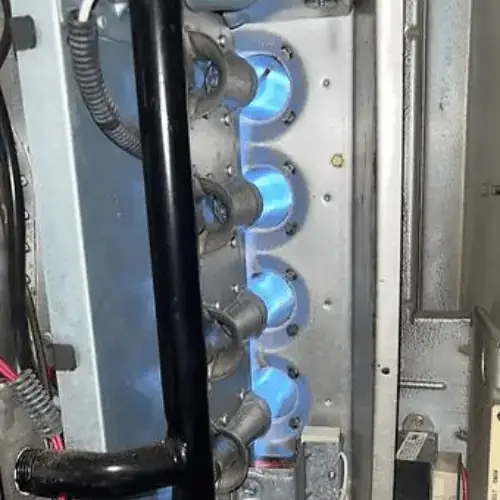
A UV light on an Osage indoor air quality job
Purifiers, UV lights, scrubbers and filters: what each one actually removes
A whole home air purifier is built into the HVAC system, so it treats every room the system reaches. It removes more particles, kills organic airborne particles and removes allergens and pet dander, and paired with a higher MERV filter it catches VOCs. A carbon air filter goes further on odors, smoke, fumes and other chemicals, which a traditional filter passes.
UV lights sit in the ducts and go after mold, mildew, bacteria and viruses, which also keeps the indoor evaporator coil cleaner. An air scrubber combines a UV light with a reaction cell in the ductwork. Bipolar ionization charges particles so they clump and are caught by the filter. Each one answers a different problem, which is why there is no single box that fixes everything.
Moisture has its own equipment. A humidifier helps a house that is too dry, and a dehumidifier handles a crawl space, garage or home that is too damp. A test kit or monitor is how you learn whether something like radon is there at all.
Chapter 03
Why the right MERV is not always the highest MERV
Filters are rated by MERV, the Minimum Efficiency Reporting Value. The higher the rating, the smaller the particles the filter can catch, and HEPA is the highest quality filter for catching airborne particles. It is natural to assume the top rating is the right answer for every house.
It is not, because the duct design may not be set up for a high MERV filter. A dense filter resists airflow, the blower works harder to pull air through it, and less air reaches the rooms. So the filter that looks best on paper can leave a system struggling. The honest answer is to ask a professional who can see your ductwork and your equipment.
Filters also keep the whole HVAC system clean and running efficiently. Osage Club members can have air filters added and changed on request. See the details on the club page.
From Osage's own FAQ: “We may mention indoor air quality if we see pets or dust, but we will never push something you do not want.”
Hidden dangers
Eleven things that can be in your home's air
- Radon
- A naturally occurring radioactive gas, the second leading cause of lung cancer in the U.S. behind smoking. No smell or color, so only a test kit or monitor finds it.
- Asbestos
- A mineral fiber once used in insulation and other construction, harmful when inhaled.
- Second Hand Smoke
- Smoke from a smoker inside the home. Over time, tar buildup becomes visible on the walls.
- Lead
- Mostly used in paint before 1980. Dust from old paint can contain lead.
- Pesticide
- Chemicals from interior or exterior bug treatments.
- Mold
- Grows wherever moisture gets in, usually visible as white or black patches.
- Formaldehyde
- Used on clothing and in the wood products that most homes are built with.
- VOCs (Volatile Organic Compounds)
- Given off by cleaning supplies, paints, glues, markers, printers and many other household products.
- Allergens
- Dust mites, pollen, grasses, pet dander, pest droppings, fungi and more.
- Carbon Monoxide
- Pushed through the duct system when the heat exchanger on a gas furnace cracks.
- Humidity
- Ideal humidity is usually between 45-55%. Above that mold grows fast, and below it can worsen asthma.
Carbon monoxide ties directly to furnace repair and the heat exchanger check, and too much humidity often traces back to an oversized system, which we cover under system installation.
Nine ways to clean the air
Whole Home Air Purifier
- Built into the home's HVAC system to remove more particles, kill organic airborne particles and remove allergens and pet dander. With a higher MERV filter it also catches VOCs.
Room Air Purifier
- The same job scaled to one room, for the space where allergies, pets or smoke are the complaint.
Carbon Air Filter
- More expensive than a traditional filter, and it keeps more out of the house. The carbon removes VOCs, odors, smoke, fumes and other chemicals.
Humidifier
- A home that is too dry is uncomfortable and can encourage bacteria and mold. A humidifier also makes a winter house feel warmer at lower temperatures, which helps keep utility bills down.
Bipolar Ionization
- Fairly new technology, and very popular. It releases positively and negatively charged ions that attach to particles in the air, kill viruses and mold, and pull particles together so the filter catches them more easily.
Dehumidifier
- Removes unwanted humidity from crawl spaces, garages, whole homes or anywhere moisture is a problem. The source may be an oversized HVAC system or a water leak, and it often ends in mold.
Air Filters (MERV, HEPA)
- Filters keep the whole HVAC system clean and running efficiently. They are rated by MERV, and HEPA is the highest quality filter for catching airborne particles.
UV Lights
- Mold, mildew and bacteria do not like the sun, and an in-duct UV light brings that power into the ducts. It helps eliminate mold, mildew, bacteria and viruses, which keeps the indoor evaporator coil cleaner and lowers utility bills.
Air Scrubbers
- Inserted in the ductwork with a built-in UV light, a scrubber pushes the circulating air through it and uses the natural humidity to release small amounts of safe hydrogen peroxide and other oxidizers. In our opinion, one of the best products for a healthy home.
What we find in the system
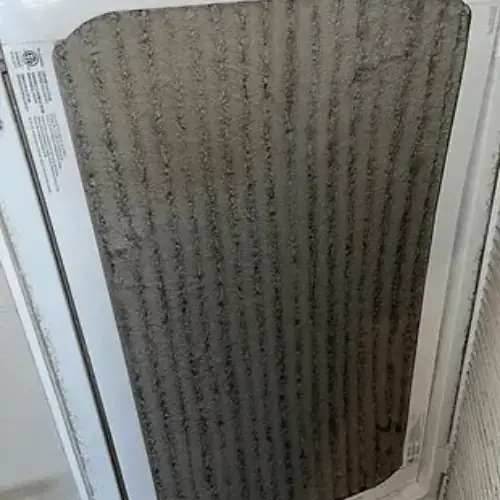
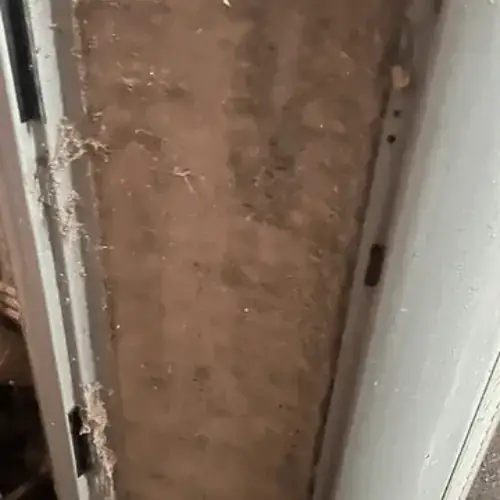
Wondering what is in your air?
Tell us what you are noticing, from dust and pet hair to damp rooms and musty smells, and we will help you sort out where to start.