Heating
Furnace repair and a heat exchanger check that matters
Furnace repair, fall tune-ups and a look for the cracked heat exchangers that let carbon monoxide into a home.
Chapter 01
What a furnace is telling you when it smells, short-cycles or will not light
A furnace rarely fails without warning. The first sign is often a smell, and each smell points somewhere different. Burning dust on the first cold morning is normal, a musty odor suggests a clogged drain or mold, rotten eggs mean a possible gas leak, and burning plastic that will not go away can mean something is overheating.
A furnace that shuts off before the house warms up, or one that will not light at all, is also talking. Those symptoms can trace back to a dirty filter starving the system of air, a failing part or a safety device doing its job. The fix depends on which one it is, and guessing wrong costs you money and a cold night.
If you ever smell gas, do not wait for an appointment. Shut off gas appliances, get everyone and every pet out of the house, and call 911 and your gas company. Once it is safe, we will inspect the unit before it runs again.
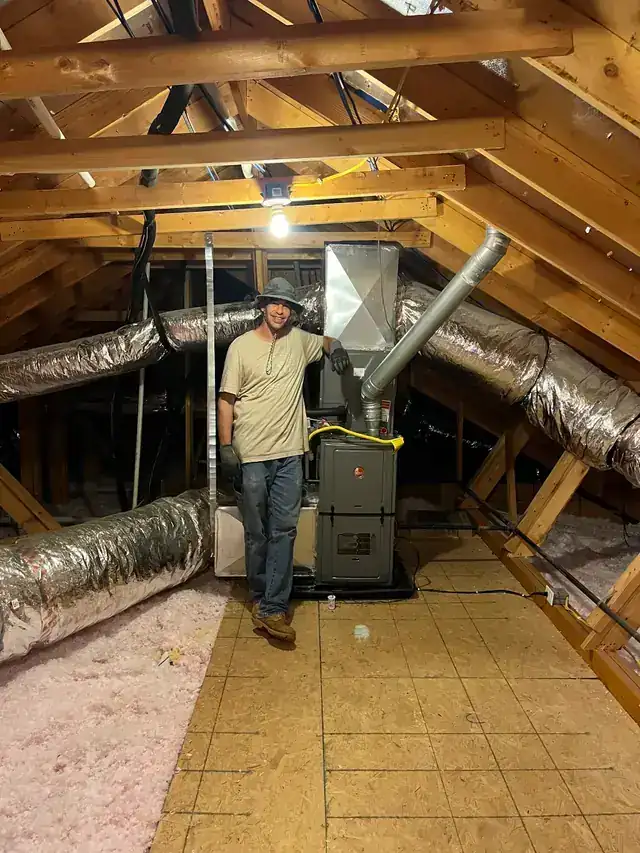
An Osage Air technician beside a new furnace installed in an attic
The heat exchanger crack check, and why carbon monoxide is the reason we look
The heat exchanger keeps the combustion gases inside the furnace and separate from the air that circulates through your home. Over time it can crack, and a crack can release carbon monoxide into the living space. Carbon monoxide is colorless and odorless, so you cannot smell your way to a warning.
That is why a furnace visit from us includes looking for cracks and other damage, and making sure the rest of the components are in good working order. Our club tune-up also includes a video inspection for carbon monoxide.
Even low-level exposure can cause headaches, dizziness and fatigue. Put detectors near the bedrooms and on each level of the house, test them monthly, and never try to repair a furnace yourself.
Chapter 03
Fall tune-ups, filters and when a repair stops being worth it
The best time to find a problem is before the first cold snap. A fall tune-up cleans and checks the furnace before the heat runs all day, and it is the second of the two yearly visits in our club membership. Filters matter too: replace them at least every three months, or as the manufacturer recommends.
When a furnace does break, we will not make the repair or replace decision for you. We show you the money side, meaning the age of the system against the cost to fix and keep it running. An 8-year-old system with a $200 fix is an easy call to repair. A 13-year-old system with a $1,000 fix is worth weighing.
Our rule of thumb is that once a repair passes about 10% of the cost of a new, more efficient system, it is time to look at options. It is your house and your budget, and only you can make that call.
“He capped an old wall heater, replaced a valve, and added new flex line on my water heater.” Theresa Gramling, Google review, gas leak fixed the same day
Smells worth a call
A furnace can give off four common odors. Some are harmless and some are not, so here is how to read them.
- Burning dust
- Common on the first run of the season. Dust, pollen or mold has settled in the furnace and ducts, and a cleaning and fresh filter usually settle it.
- Mustiness
- Points to a clogged drain, a dirty humidifier filter or mold growth in the system. If mold is suspected, it needs professional remediation.
- Rotten eggs or sulfur
- Gas companies add that odor so leaks are easy to notice. Shut off gas appliances, get everyone and every pet outside and call 911 and your utility company.
- Burning plastic
- A brand new furnace can give off a little at first. On an older system that keeps going, it can mean overheating or a failing part.
The fall furnace tune-up
Our club membership includes a minimum of two yearly visits, a spring air conditioning tune-up and a fall furnace tune-up, with priority scheduling and no trip and diagnostic charge during normal business hours. The fall visit is where we check airflow, test the motors and electrical components, inspect the blower compartment and look for carbon monoxide.
Related services
Cold house, or a smell you do not like?
Call the office and we will get a technician on the schedule, or send us the details and we will get back to you.