What is the average life span of an HVAC system in NWA?
Ten to twelve years is a fair expectation with regular maintenance, but equipment, upkeep and our Arkansas weather all move that number.
September 30, 2026 · 4 min read
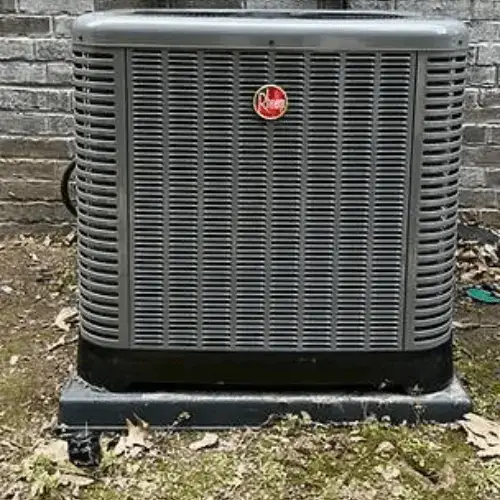
Homeowners ask us this all the time, usually right after a repair estimate lands on the kitchen counter: how long is this system supposed to last? The honest answer is that it depends. For a system that gets a tune-up every spring and every fall, 10 to 12 years is a realistic range in Northwest Arkansas.
That is an average, not a promise. Some systems fail earlier, and some run well past it. Three things do most of the work in deciding where yours lands: the equipment itself, how it has been maintained, and the weather it lives in.
The equipment you start with
Quality and brand matter. Higher-end systems tend to be built with better components, run more efficiently and carry features that help them keep your home comfortable for longer. Lower-end equipment may not hold up as well and can need repairs or replacement sooner.
Installation matters just as much as the box. A good unit installed poorly will not reach its potential. Improper installation is one of the reasons some systems give out before they should, and it is also why who sets up your system is as important as what they set up.
Maintenance is the biggest lever you control
Regular maintenance is the single thing most within your control. A tune-up is not a quick glance at the thermostat. A proper visit typically includes:
- Cleaning the coil.
- Checking and lubricating moving parts.
- Checking the refrigerant charge.
- Inspecting electrical connections.
- Evaluating overall system performance.
Skip those visits and the wear builds up quietly. The system works harder, runs less efficiently and is more likely to fail early. At Osage Air we offer this as a club membership: a spring AC tune-up and a fall furnace tune-up, at least two visits a year, for $219.99.
Our weather is hard on equipment
Where a system lives changes how long it lasts. Heat, cold, humidity and the quality of the air all affect the components. We live in Northwest Arkansas, where the temperature swings are real. A summer of long, humid, hot days leans on your air conditioner, and a cold January leans on your heating.
Those swings mean a system can be running at year eight or ten and still not be running well. It may cool the house, but it may also use more power than it should and be one hot week away from a breakdown.
When an older system costs more than it is worth
Here is the part people do not always want to hear. Keeping an older system alive is often harder on your bank account than looking at replacement. The repairs get more frequent, the efficiency slips, and each bill feels like money into something with a short road ahead.
We use a rule of thumb. Once a repair passes about 10% of the cost of a new, more efficient system, it is time to weigh your options. That does not mean you have to replace anything. It means the repair is no longer a no-brainer, and it is worth a real conversation about what makes sense for your house and your budget. We will lay the options out, and we will never make that decision for you.
Why some systems fail early
A few patterns show up again and again when a system dies before its time:
- Heavy use, such as a house that runs its air conditioner nearly nonstop through a long summer.
- Poor installation, including duct and refrigerant line problems.
- No maintenance, so small issues turn into big ones.
- Lower-grade equipment that was never built for the long haul.
The good news runs the other way too. A well-installed system that is cleaned and checked twice a year can go past the average.
What to do with this information
If your system is under about eight years old, your best move is simple: keep up with the tune-ups and change your filter on schedule. If you are in the 10 to 12 year zone, start paying attention. Notice the bills, the noises, the rooms that never get comfortable, and the repairs that keep happening. You do not have to decide anything yet, but it is better to think it through on a mild spring day than in the middle of a heat wave with a dead unit.
If you are not sure how old your system is or how much life it has left, call Osage Air at (479) 349-3502. We will look it over, tell you plainly where it stands, and talk through what makes sense. No pressure, and no pushing you toward a new system you do not need.
Osage Air, (479) 349-3502
Call (479) 349-3502More articles
Decoding Furnace Smells
Some furnace smells are just the first cold snap stirring up dust, and some mean you should leave the house, so here is how to tell them apart.
Importance of Air Quality
You spend most of your time indoors, so the air inside your house deserves as much attention as the temperature.