Decoding Furnace Smells
Some furnace smells are just the first cold snap stirring up dust, and some mean you should leave the house, so here is how to tell them apart.
September 30, 2026 · 4 min read
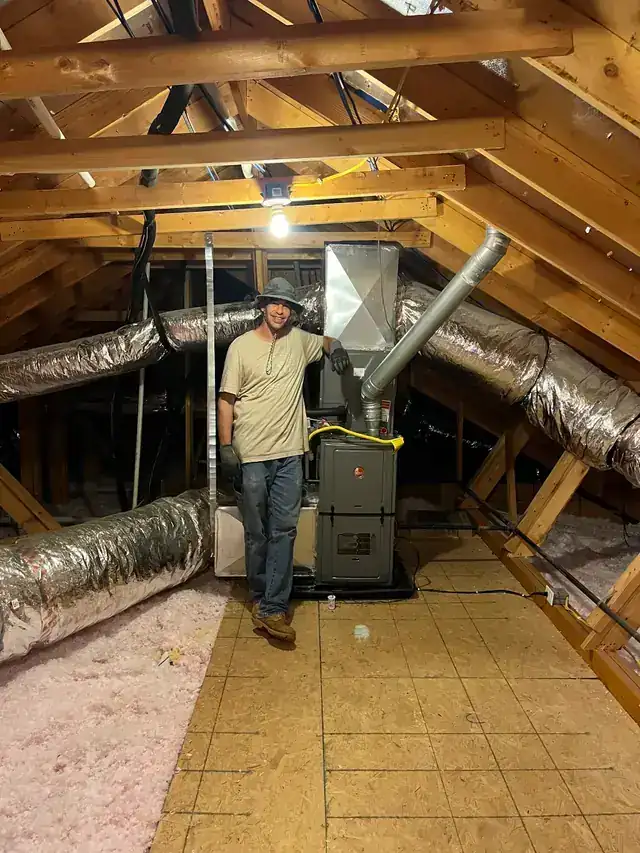
The first cold night of the year, you turn the heat on and the house smells a little off. Most of the time that is nothing to worry about. Once in a while it is the first warning of something serious. Like any machine, a furnace needs regular cleaning and upkeep to run well, and its smells are often the first sign that something has changed.
Because your furnace pushes air through the whole house, whatever smell starts near the unit does not stay there. It travels through the ducts and shows up in the bedrooms, the living room and the hallway. That is useful, because you notice it early, and it is also why it is worth knowing what you are smelling.
The four smells people mention most
- Burning dust: a warm, dry, toasted smell, usually in the first hours or days of the heating season.
- Mustiness: a damp, stale, basement kind of smell when the furnace runs.
- Rotten eggs: a sulfur smell that can point to a gas leak.
- Burning plastic: a sharp, chemical smell that can mean a part is overheating.
Burning dust is usually normal
If you smell burning dust when you first fire up the furnace after months off, dust has settled on the heat exchanger and other hot parts over the summer, and it is cooking off. It should fade within a short time. The same goes for pollen and stray debris that got into the system or the ducts while it sat idle.
It is not dangerous in the way a gas smell is, but it is a reminder. Those same particles do not all burn off. Plenty of them get blown around your home and end up in the air you breathe. A clean furnace, a fresh air filter and a duct cleaning every so often can make a real difference in the air inside your house.
A musty smell points to moisture
A musty or moldy smell usually means there is moisture somewhere it should not be. Common causes are a clogged condensate drain, a dirty filter on a whole-house humidifier, or mold growing in the system itself. If you suspect mold, do not just spray something and hope. Mold can be a health risk for the people living in the house, so it deserves a professional look and proper cleanup.
Rotten eggs means treat it as a gas leak
Natural gas has no smell on its own. Gas companies add a sulfur odor on purpose so that leaks are easy to notice. If you smell rotten eggs near your furnace or anywhere in the house, take it seriously every time, even if it is faint.
Here is what to do:
- Shut off gas appliances if you can do it quickly and safely.
- Get everyone out of the house, pets included.
- Call 911 once you are outside.
- Call your gas utility so they can shut off the gas and check for leaks.
- Do not go back in until you have been told it is safe.
After the emergency is handled and the leak is found and fixed, have an HVAC professional inspect the furnace before you use it again. A furnace that has been involved in a gas problem should be checked, not assumed fine.
Burning plastic should not last
A brand new furnace can give off a burning smell the first time it runs. That is normal. Parts of the heating system carry a protective oil coating from manufacturing, and it burns off in the first hours of operation. If the smell is still there after that, call someone.
On an older furnace, a burning plastic smell should not be there at all. If it keeps coming back, something may be overheating, a wire or component could be failing, or an object may have fallen into the unit. Turn the furnace off and have it looked at before you run it again.
Oil smells and anything else unusual
Any strange odor from your heating system deserves attention, and an oil smell in particular can point to a real hazard. This is one of those moments where the right move is not a home fix. Furnaces combine fuel, electricity and exhaust, and a wrong guess can hurt someone. Leave the repair to a qualified technician.
Smells are easier to prevent than to decode
Most furnace odors trace back to the same thing: a system that has not been cleaned, inspected or had its filter changed in too long. A fall tune-up before you need the heat lets a technician clear out dust, check the burners and the heat exchanger, and spot problems while they are still small. That is the quiet, cheap way to avoid a surprise at 2 a.m. in January.
If you have noticed a smell you cannot place, or you want your furnace checked before the cold hits, call Osage Air at (479) 349-3502. We will tell you what we find and what your options are, and we will leave the decision to you. Our club membership includes a fall furnace tune-up and a spring AC tune-up, so the check happens before the season instead of after a problem.
Osage Air, (479) 349-3502
Call (479) 349-3502More articles
What is the average life span of an HVAC system in NWA?
Ten to twelve years is a fair expectation with regular maintenance, but equipment, upkeep and our Arkansas weather all move that number.
Importance of Air Quality
You spend most of your time indoors, so the air inside your house deserves as much attention as the temperature.